
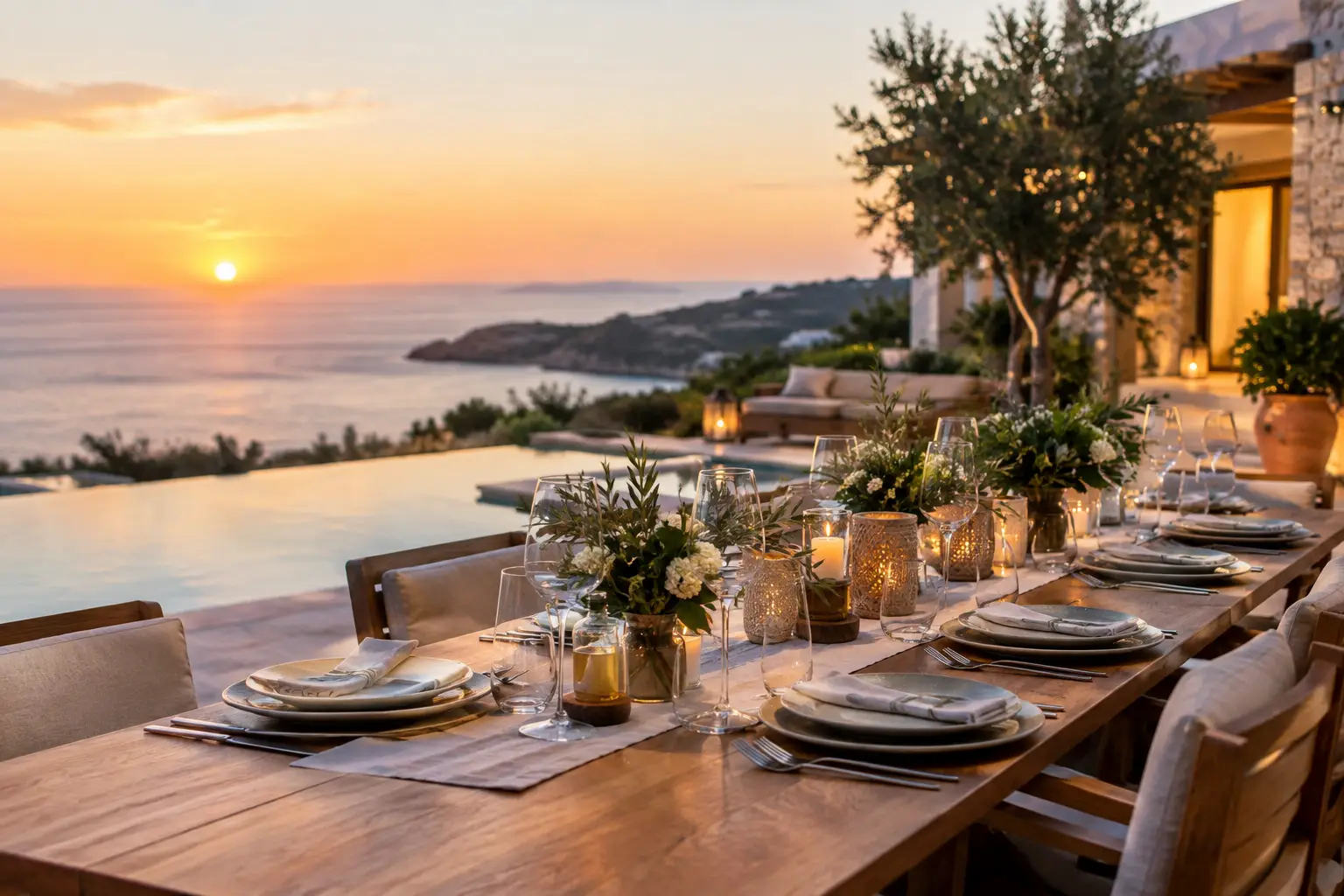
How to Plan Villa Dinner Without Missing a Detail
How to Plan Villa Dinner That Feels Personal
The best villa dinners do not feel like events being managed in the background. They feel like the evening naturally belongs to everyone at the table: drinks arrive at the right moment, conversation lingers, and no one disappears into the kitchen just as the atmosphere begins to build. Knowing how to plan villa dinner well is less about adding more details and more about making the right decisions early.
A beautiful setting is only the starting point. The real difference lies in the pace of the evening, the comfort of your guests, and a menu that makes sense for the occasion and the home. Whether you are welcoming close friends after a day on the coast or hosting a more formal celebration, a little thoughtful planning turns dinner into a memory rather than a schedule to manage.
Start With the Mood, Not the Menu
Before choosing dishes, decide what you want the evening to feel like. A long, candlelit dinner on a terrace calls for a different rhythm than a relaxed gathering by the pool. Formal does not have to mean stiff, and casual does not have to mean improvised.
Consider the time guests will arrive, where they will gather before dinner, and how long you would like the meal to last. For a sunset occasion, allow time for an aperitif before anyone sits down. This gives guests a chance to settle in, appreciate the setting, and move naturally from the first drink to the first course.
The purpose of the dinner should guide the level of ceremony. A milestone celebration may suit a composed multi-course meal and a dressed table. A reunion of old friends may be better served by generous sharing plates and an unhurried pace. Both can feel luxurious when the details are intentional.
Choose a Guest Count That Suits the Space
A villa can look expansive in daylight and feel quite different once chairs, place settings, serving space, and evening lighting are in place. Rather than planning around the maximum number of people the dining table can technically hold, plan around the number who can dine comfortably.
Give each guest enough room to settle in without bumping elbows or reaching across the table throughout the meal. If the group is larger, two thoughtfully arranged tables can feel more inviting than one crowded table. For an outdoor dinner, also have a graceful backup plan for wind, cooler temperatures, or an unexpected change in weather.
Build a Menu Around the Evening's Rhythm
A memorable menu has contrast, but it should not ask too much of the guests. Rich dishes work beautifully when balanced with freshness. Several small courses create anticipation, while a more relaxed format gives conversation room to breathe. The right choice depends on the occasion, the time available, and how people will spend the hours before dinner.
If guests have been out in the sun, a lighter opening course and bright seasonal flavors often feel more welcoming than an immediately heavy meal. If dinner begins later and is meant to be the main event, a more layered progression can be ideal. A carefully planned dessert course matters too: it signals whether the evening is winding down or continuing over coffee, cocktails, and conversation.
Share guest preferences before the menu is finalized, not on the day itself. This is not only about restrictions. It can include favorite ingredients, ingredients guests would rather avoid, children at the table, or the level of adventure everyone enjoys. A good host anticipates these details quietly so every guest feels considered without the dinner becoming a discussion about food.
For hosts who would rather not coordinate shopping, preparation, timing, and presentation, working with a private chef in Mallorca allows the menu to be designed around the actual occasion rather than a fixed restaurant format.
Keep the Drinks Plan Focused
Drinks should support the meal and the mood, not create unnecessary choices. Start with one welcome drink that fits the setting, then offer a considered selection of wine, still and sparkling water, and a nonalcoholic alternative that feels just as special.
You do not need a different bottle for every course unless wine pairing is central to the experience. Often, one crisp white and one elegant red are enough for an intimate dinner, particularly when the menu has been designed with them in mind. If the group has a favorite celebratory drink, save it for the arrival or dessert course so it has a clear moment.
Give the Table a Reason to Be Remembered
The table is where the villa setting becomes an occasion. It does not need elaborate styling to look considered. In fact, a few well-chosen details usually feel more refined than an overfilled table that leaves no room for plates, glasses, or easy conversation.
Start with lighting. As daylight fades, soft candlelight or warm lamps create more atmosphere than bright overhead fixtures. Make sure guests can still see their food and one another comfortably. If you are dining outside, test the lighting at the actual dinner time rather than relying on how the terrace looks in the afternoon.
Choose a simple palette that works with the villa rather than competing with it. Natural linens, glassware, low floral arrangements, and seasonal greenery can bring the table together without blocking sightlines. Low arrangements are especially valuable for groups that have not seen each other in some time. The point is connection, not decoration placed between guests.
Place cards can be useful for a special occasion, but they are not always necessary. Use them when seating needs gentle structure, such as bringing together different families or ensuring older guests are closest to the most comfortable chairs. Otherwise, a more relaxed approach may suit the evening better.
Plan the Flow Beyond the Table
Many dinner plans focus entirely on the meal, then leave the arrival and final hour to chance. Yet these are often the moments guests remember most clearly. Think about where coats, bags, and phones will go on arrival. Decide where drinks will be served and whether music should follow guests from one space to another.
Music deserves the same restraint as table styling. Create a playlist that matches the energy you want, but keep it low enough that no one has to compete with it. If the evening begins with lively conversation and gradually becomes more intimate, let the music follow that shift.
It also helps to decide in advance what happens after dessert. Perhaps guests move to a lounge area for coffee. Perhaps the terrace becomes the setting for one final drink. A simple transition gives the evening shape and prevents the common host dilemma of wondering what to do next while everyone is still enjoying themselves.
Allow More Time Than You Think You Need
A villa dinner should never feel like a restaurant reservation with a clock attached. Build in breathing room between arrival, the first course, and each later moment of the evening. Guests may want to watch the sunset, take photographs, or simply stay in a good conversation longer than expected.
This is particularly relevant in Mallorca, where an evening can begin in warm late-afternoon light and become noticeably cooler after dark. Have wraps available for an outdoor table, and make the indoor space feel equally welcoming if guests choose to move inside. Flexibility is a hallmark of good hosting because it lets the atmosphere lead.
Confirm the Practical Details Early
The most polished evenings are supported by a few unglamorous but essential checks. Confirm the dinner time, guest count, address, access instructions, parking, and the areas of the home you intend to use. If the meal is outdoors, identify the nearest indoor alternative before the day arrives.
Think about the kitchen as a working space, not just a beautiful room. Counter space, refrigeration, oven capacity, and access to basic equipment can affect how a dinner is planned. A professional culinary team will ask the right questions in advance and adapt the plan to the home, but clear information early on makes the experience calmer for everyone.
If you are arranging professional dining service, book as soon as your dates are firm. The most sought-after evenings, especially weekends and holiday periods, tend to be reserved ahead of time. Once the date is secured, you can stop thinking about logistics and return your attention to the people you have invited.
A well-planned villa dinner leaves the host free to be present from the first greeting to the final glass. Set the tone, make space for comfort, and let the evening unfold at the pace of the people around your table.
Ready to plan your next private dining experience?
Book your date or request a personalized quote today. Our chefs are ready to bring the restaurant experience to your door.